For those of you working on special functions like Bessel functions who know you learned Fourier Transforms at some point but need help untangling how they work.
Author: tamethemathdemonadmin
If you’re studying General Relativity or Tensor Calculus you’ve slammed into the Riemann tensor and its flurry-of-gammas-and-indices definition. But at its heart, the Riemann is just saying “move a vector around a tiny parallelogram first one way and then the other. Get a different result one way? Then the space is curved.” This video matches up the symbols and indices to that basic definition. I always remember something better when it makes sense. This video should help you remember the Riemann’s definition too.
For those of you who know how to solve absolute value inequalities, here is how they also mean something like “numbers between 8 and 14.”
InĀ The Feynman Lectures on Physics, Volume 3 Chapter 5, Feynman poses a challenge to the reader: show that a particular combination of plus, minus and zero states of a spin one particle transforms under a rotation just like a vector does. In this previous video I reviewed the details of proving it for rotations around the z-axis. Here I go over the more complicated proof for rotations around the y-axis.
In The Feynman Lectures on Physics, Volume 3 Chapter 5, Feynman poses a challenge to the reader: show that a particular combination of plus, minus and zero states of a spin one particle transforms under a rotation just like a vector does. Here I go over how to work that problem using only what was covered in the book up to that point.
Getting the Period of a Spring-Operated Physical Pendulum
A juicy physics problem that requires delving into the differential equation for pendulum motion. A rod of mass M on a pivot a distance r from the end is driven by a spring of constant k pulling the end back and forth to make an (admittedly stupid) physical pendulum. We have to show that its period T is given by .
A Flying Rock on the Moon — a Kinematics Problem
A nice tough physics kinematics problem: how high will a flying rock on the moon rise if all you know is how long it took to pass a viewport?
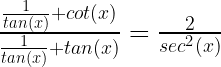
A moderately difficult trig identity: prove using u-substitution.
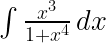
This video walks through doing using u-substitution.
Prove 2 lines parallel using CPCTC
Geometry proofs don’t have to be nightmares. You can create your chain of logic just right if you start at the END. I’ll show you what I mean…