If you’re studying General Relativity or Tensor Calculus you’ve slammed into the Riemann tensor and its flurry-of-gammas-and-indices definition. But at its heart, the Riemann is just saying “move a vector around a tiny parallelogram first one way and then the other. Get a different result one way? Then the space is curved.” This video matches up the symbols and indices to that basic definition. I always remember something better when it makes sense. This video should help you remember the Riemann’s definition too.
Category: Math
For those of you who know how to solve absolute value inequalities, here is how they also mean something like “numbers between 8 and 14.”
In The Feynman Lectures on Physics, Volume 3 Chapter 5, Feynman poses a challenge to the reader: show that a particular combination of plus, minus and zero states of a spin one particle transforms under a rotation just like a vector does. In this previous video I reviewed the details of proving it for rotations around the z-axis. Here I go over the more complicated proof for rotations around the y-axis.
In The Feynman Lectures on Physics, Volume 3 Chapter 5, Feynman poses a challenge to the reader: show that a particular combination of plus, minus and zero states of a spin one particle transforms under a rotation just like a vector does. Here I go over how to work that problem using only what was covered in the book up to that point.
Getting the Period of a Spring-Operated Physical Pendulum
A juicy physics problem that requires delving into the differential equation for pendulum motion. A rod of mass M on a pivot a distance r from the end is driven by a spring of constant k pulling the end back and forth to make an (admittedly stupid) physical pendulum. We have to show that its period T is given by .
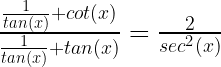
A moderately difficult trig identity: prove using u-substitution.
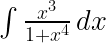
This video walks through doing using u-substitution.
Prove 2 lines parallel using CPCTC
Geometry proofs don’t have to be nightmares. You can create your chain of logic just right if you start at the END. I’ll show you what I mean…
Once you’ve established that curl F = 0, you know that F is the gradient of some potential ⱷ. You can use the Fundamental Theorem to evaluate ∫F.dr — if only you could find the potential function. In this video I go over a straighforward method of finding the potential function using partial integration. (Note: the sound quality gets wonky near the end but you can still hear what I’m explaining perfectly well. Apologies and I’ll figure out eventually why that happens.)
A step-by-step example of how to find the area of a polygon